
NEWS
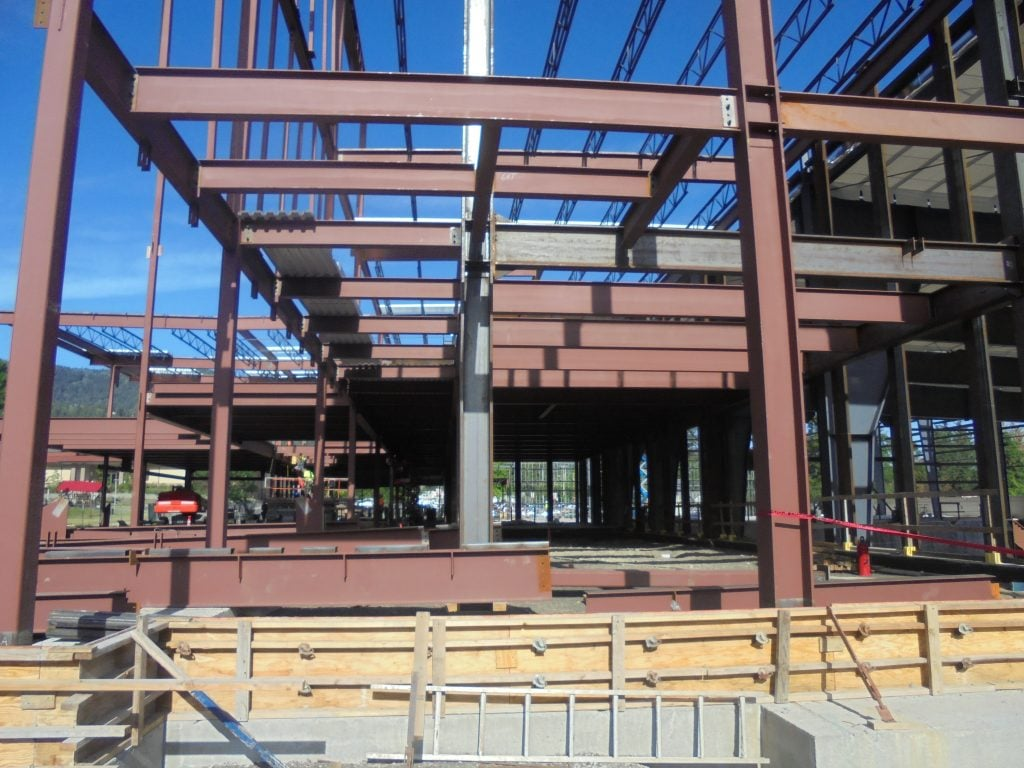
I-beams, long steel bars with an I-shaped cross-section, are also known as steel beams, and their English name is Universal Beam. This type of steel can be divided into ordinary I-beams and lightweight I-beams, both with an I-shaped cross-section. In addition, there is a wide-flange I-beam, also known as an H-beam, characterized by its parallel flanges and no inner slope. It is considered an economical cross-section steel and is often rolled on a four-roll universal rolling mill, hence the name "universal I-beam." Currently, both ordinary and lightweight I-beams have national standards.
Application Scenarios
Due to the dimensional characteristics of I-beams—relatively high height and narrow width—both ordinary and lightweight types, the moments of inertia of their two principal axes differ significantly. Therefore, this type of steel is mainly suitable for members subjected to bending within the plane of its web, or for being combined into lattice-type load-bearing members. However, I-beams are less suitable for axially compressed members or members with bending in the plane perpendicular to the web, which limits their application range to a certain extent.
Selection Considerations
Nevertheless, I-beams still have wide applications in construction and other metal structures. When selecting I-beams, it is necessary to follow the requirements of the design drawings and comprehensively consider multiple factors such as their mechanical properties, chemical properties, weldability, and structural dimensions to ensure that suitable I-beams are selected for the structural design.
Leave A Message
If you are interested in our products and want to know more details, please leave a message here, we will reply you as soon as we can.